Yellow Pothos leaves are one of those symptoms that can mean several different things, which is why they’re so frustrating to diagnose.
The good news is that some causes are far more likely than others, and once you know what to look for alongside the yellowing, narrowing it down is straightforward.
Here’s every cause ranked by how likely it actually is, and what to do about each one.
First: The One Thing Everyone Gets Wrong About Yellow Leaves
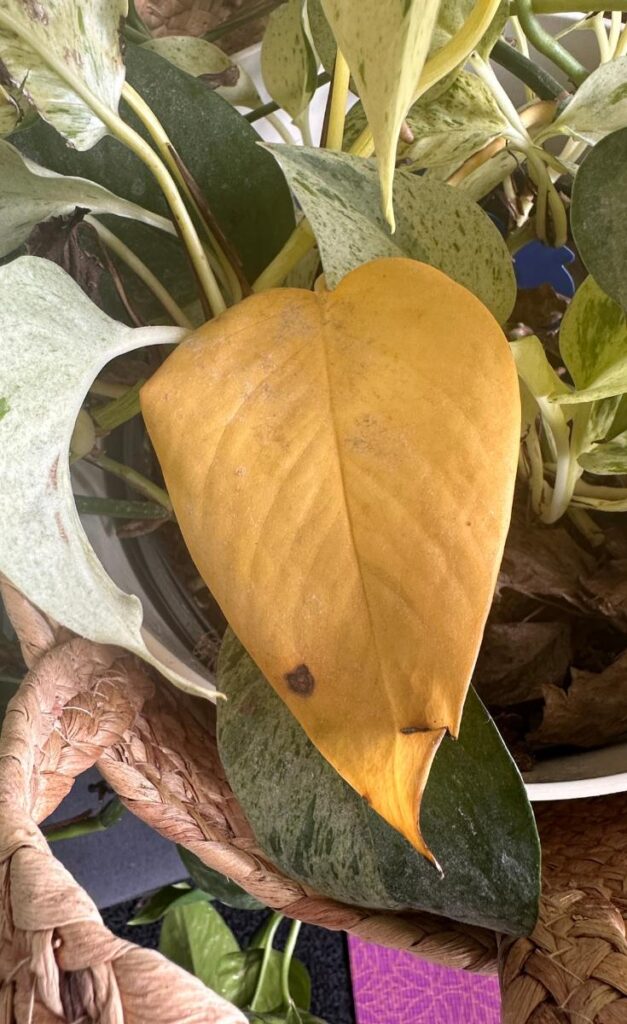
Before you do anything else, there’s something important to understand about yellow leaves: they are not going to turn green again.
Once a leaf starts going yellow, the plant is in the process of withdrawing everything useful from it — the chlorophyll, the nutrients, the green.
In very layman’s terms, the plant knows the leaf is on its way out, so it reclaims everything it can before it goes. A yellow leaf is essentially a leaf the plant has already written off.
This matters because a lot of people spend weeks trying to “fix” a yellow leaf, adjusting their watering, moving the plant, adding fertiliser — and then feel like nothing is working because the leaf stays yellow.
It’s staying yellow because it’s dying, not because you haven’t found the right fix yet. The fix is about stopping more leaves from going yellow, not about saving the ones that already have.
Cut off the leaves or don’t. There’s arguments for both. Sure, the plant can grab some nutrients from the leaf, but they can attract pests (not in my experience, but it’s worth mentioning).
The Causes of Yellow Pothos Leaves, Ranked By Likelihood
1. Overwatering (Most Likely)
Overwatering is the most common reason Pothos leaves turn yellow, and it’s the first thing to check. When the soil stays wet for too long, roots start to rot and can no longer absorb water or nutrients properly. The plant responds by shedding leaves it can no longer support, starting with the oldest ones at the base.
Signs it’s overwatering: Multiple leaves going yellow at once, especially lower older leaves. Soil feels wet or damp. Possibly drooping even though the soil is moist. Mushy stems or a bad smell from the soil.
What to do: Stop watering and let the soil dry out completely. Check the roots for rot — if they’re brown and mushy rather than white and firm, you’ve got root rot that needs dealing with. Full overwatering guide here.
2. Root Rot
Root rot is what happens when overwatering goes unchecked for long enough. The roots die off and can no longer feed the plant, causing widespread yellowing as the plant progressively loses the ability to support its leaves. It’s essentially overwatering taken to its logical conclusion.
Signs it’s root rot specifically: Yellowing that’s spreading, drooping that doesn’t improve even after you’ve let the soil dry out, mushy brown roots if you check, a sour smell from the soil.
What to do: Take the plant out of its pot, cut off all the rotten roots, and move it to fresh dry soil or into water to recover. Root rot guide here.
Root Rot In Pothos: Can You Save It?
3. Natural Leaf Turnover (Very Common, Very Normal)
This one gets overlooked constantly. Pothos regularly shed old leaves as part of normal growth, and those leaves go yellow first. If it’s just one or two leaves at the base of a long trailing stem — the oldest leaves on the plant — and the rest of the plant looks healthy, this is almost certainly just natural ageing rather than a problem.
Signs it’s natural turnover: Just one or two leaves yellowing at a time. The affected leaves are the oldest ones, furthest from the growing tip. New growth is coming through elsewhere. No other symptoms.
What to do: Nothing. Remove the yellow leaves once they’ve fully turned and carry on.
4. Pests
Some pest infestations cause yellowing as the plant’s health declines. Spider mites and thrips, in particular, damage leaf cells as they feed, causing yellow stippling that can spread across the leaf. Scale and mealybugs drain sap and can cause yellowing too.
Signs it’s pests: Yellow patches or stippling rather than whole leaves going uniform yellow. Visible insects or webbing on the undersides of leaves. Sticky residue on leaves or nearby surfaces.
What to do: Identify the pest and treat accordingly. Insecticidal soap or diluted dish soap applied directly to the affected areas works for most common culprits. Remove heavily infested leaves. Isolate the plant from others while you treat it.
Common Pothos Pests: How To Identify and Destroy Them
5. Low Light
Pothos can survive in low light, but long-term low light causes the plant to produce less chlorophyll — which means the leaves lose some of their green. This usually shows up as a gradual, overall paleness or fading rather than individual leaves going bright yellow, but in very dim conditions leaves can yellow and drop as the plant struggles to sustain itself.
Signs it’s low light: Yellowing is gradual and affects the whole plant rather than specific leaves. New growth is small or slow. The plant may be getting leggy, reaching toward the nearest light source.
What to do: Move it somewhere brighter. A north-facing shelf in a UK winter is not enough light for a healthy Pothos. Bright indirect light is ideal, and if your home is dark in winter, a grow light will make a significant difference.
6. Nutrient Deficiency (Least Likely For Most People)
This sits at the bottom of the list because for the vast majority of Pothos owners — especially beginners using shop-bought potting compost — nutrient deficiency is not the cause of yellow leaves. Fresh potting mix contains enough nutrients to keep a Pothos going for a long time, and Pothos are not particularly heavy feeders.
That said, if your plant has been in the same soil for years, or if you’re growing in a very low-nutrient medium, deficiency is possible. Nitrogen deficiency in particular shows up as yellowing starting with the older, lower leaves — which is also what overwatering looks like, so rule that out first.
Signs it might be nutrient deficiency: The plant is in very old soil or a nutrient-free medium. You’ve never fertilised it. Yellowing starts with older leaves and the plant otherwise looks healthy with no other symptoms.
What to do: If you’ve ruled out everything else and the plant has been in the same soil for years, a balanced liquid fertiliser applied at half the recommended dose once a month during the growing season is a reasonable next step. Don’t jump to fertiliser as a first fix — it won’t help if the real problem is watering.
Quick Diagnosis Guide
Not sure which one you’re dealing with? Start here:
- Check the soil first. Wet or damp? Overwatering or root rot. Bone dry? Could be underwatering, though yellowing is less common with underwatering than other symptoms.
- How many leaves? One or two at the base = probably natural. Several at once = watering issue or pests.
- Check the undersides of leaves. Bugs, webbing, or sticky residue = pests.
- Where is the plant? Dark corner with no direct light = could be light-related.
- How long has it been in the same soil? Years with no feeding = consider nutrients, but rule everything else out first.
Yellow Pothos Leaves FAQs
Will yellow Pothos leaves turn green again?
No. Once a leaf has started going yellow, the plant has already begun withdrawing chlorophyll and nutrients from it. It won’t reverse. Remove yellow leaves once they’ve fully turned and focus on stopping more from yellowing by fixing the underlying cause.
Should I cut off yellow Pothos leaves?
Yes. Once a leaf is fully yellow, remove it. It’s not going to recover, and keeping it on the plant just makes it harder to monitor whether the problem is improving.
Is it normal for Pothos leaves to turn yellow?
One or two lower leaves going yellow occasionally is completely normal — it’s just the plant shedding old growth. Multiple leaves yellowing at once, or yellowing that’s spreading, is a sign something needs attention.
Can overwatering cause yellow leaves on Pothos?
Yes, and it’s the most common cause. Consistently wet soil leads to root rot, which prevents the plant from absorbing water and nutrients, causing leaves to yellow and drop. Check the soil and read the overwatering guide if you think this might be it.
Can too little light cause yellow Pothos leaves?
Yes, though it tends to show up as gradual overall fading rather than individual leaves going bright yellow. Pothos can tolerate lower light than many plants, but long-term low light will eventually affect leaf colour and plant health.
New to Pothos? Yellow leaves in the first few weeks of ownership are almost always either natural leaf turnover or a watering issue. The free guide — Everything You Need To Do When You Bring Your First Pothos Home — helps you get watering right from day one.